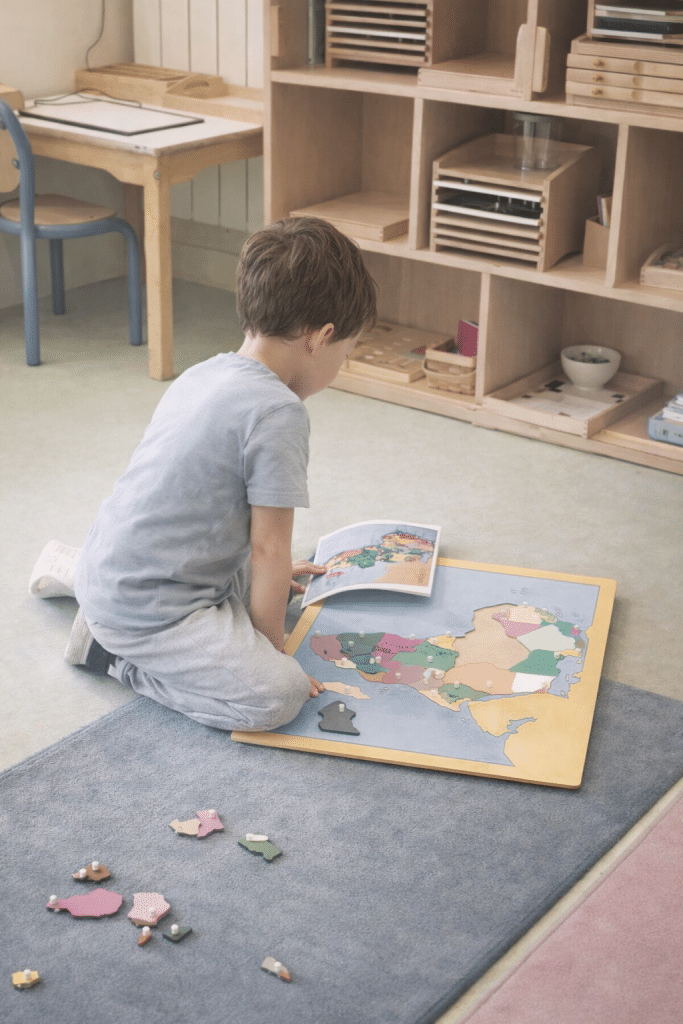
Montessori education is not simply a branding element here. It structures the school’s daily life through a prepared environment, specific materials, mixed-age groups, and extended work periods that foster concentration, autonomy, and active engagement in learning.
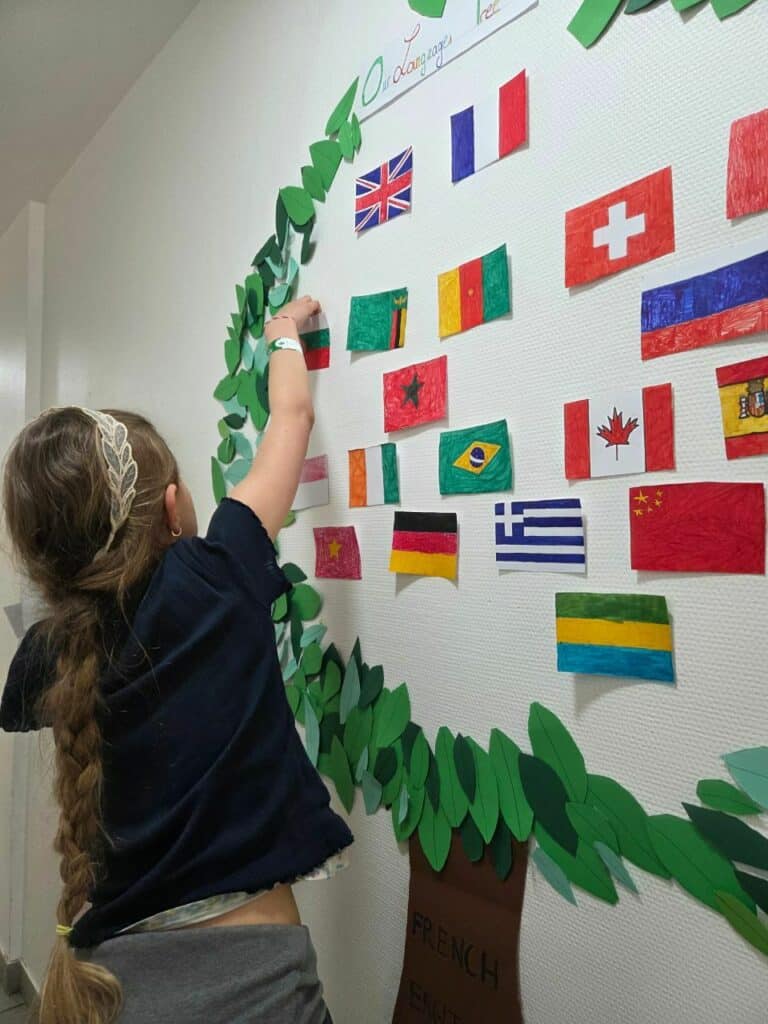
Bilingualism is also fully integrated into daily life. French and English are not treated as two separate subjects, but as two languages experienced in the child’s routines, learning, and interactions.
A prepared environment and concrete materials to support autonomy and concentration.
A trained team, attentive to each child's rhythm and progress.
Two languages experienced in classroom routines, exchanges, and learning.
The school supports each child attentively, respecting their rhythm, personality, and learning style.
This pedagogical rigor does not conflict with the child’s well-being. On the contrary, it seeks to provide a structured, clear, and reassuring framework in which they can progress, gain confidence, and develop a love of learning.
The goal is not only for the child to feel comfortable at school, but to advance in their learning with solid and lasting foundations.
Each child progresses at their own pace, with attention to their needs and learning style.
A clear and reassuring framework helps the child find their bearings, concentrate, and progress sustainably.
Learning is built with rigor and consistency to support lasting confidence.
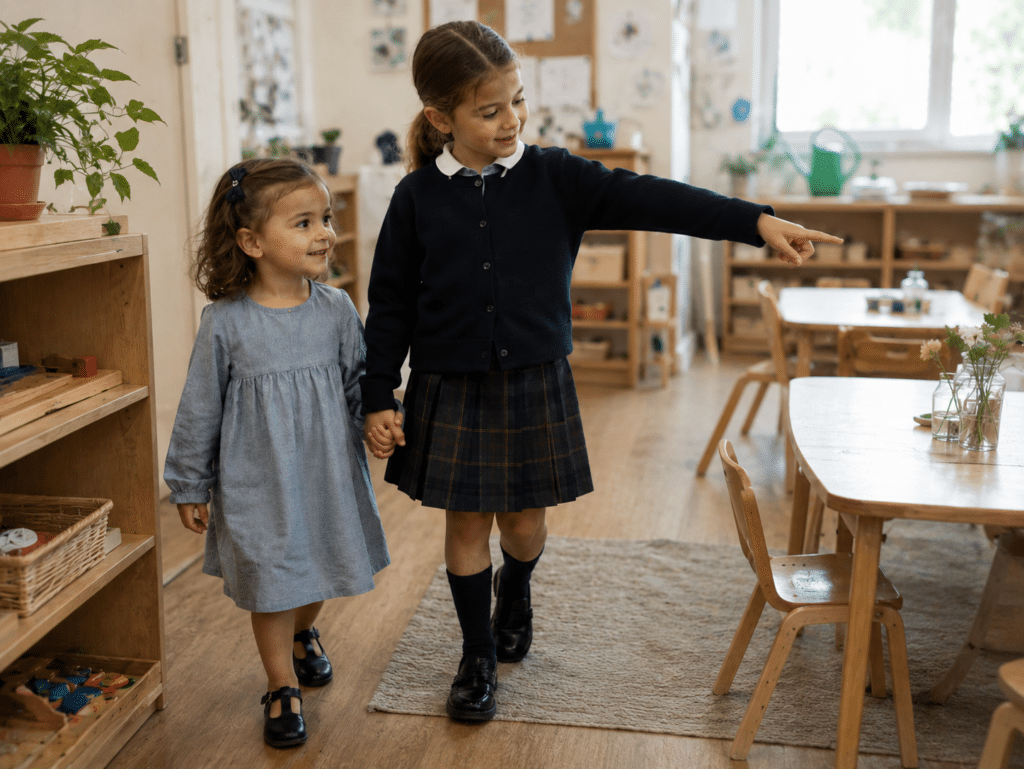
Younger children learn by observing the gestures, attitudes, and successes of older ones.
Older children reinforce their knowledge by explaining, helping, and taking an active role.
The mixed-age group encourages mutual support, autonomy, and confidence in learning.
Working in mixed-age groups is an integral part of the school’s Montessori approach.
It allows younger children to observe, imitate, and grow in a stimulating environment, and older children to consolidate their knowledge, develop their confidence, and gradually take a more active role in the group.
This organization fosters autonomy, cooperation, and continuity of learning in a more natural and fluid dynamic.

Bilingualism is present from preschool and becomes naturally integrated into the child’s daily life.
In preschool, it is experienced through routines, activities, relationships with teachers, and the prepared environment. In elementary, it becomes more structured and ambitious, with progressive reinforcement of learning in English.
This progression leads most students at the end of the cycle to Cambridge English A2 Flyers level. Cambridge Flyers represents strong evidence of progress, but it is part of a broader project: creating solid, natural, and sustainable bilingualism.
Cambridge English A2 Flyers confirms progress built over time within a broader bilingual pathway.
In Rueil-Malmaison, bilingual Montessori education helps each child build solid foundations, develop concentration, and progress in a framework that is both rigorous, reassuring, and open to the world.
The child learns to work independently, make choices, organize themselves, and gain confidence in their abilities.
The Montessori framework fosters a deeper, calmer, and more engaged relationship with learning.
The pedagogy encourages the child to observe, question, explore, and connect knowledge.
Bilingualism becomes a daily reality, integrated into the environment and learning.
The child progresses through a coherent, rigorous, and structured pathway that calmly prepares them for what comes next.
Individualized support and the stability of the framework allow them to progress in a reassuring and stimulating environment.
The school’s strength also lies in the continuity between preschool and elementary. Children progress through a coherent pathway with stable pedagogical reference points, clear progression, and increasing depth of learning.
This coherence between Montessori education, bilingualism, and individualized support gives the child’s pathway greater depth, stability, and meaning.
From preschool to elementary, the child progresses with stable pedagogical reference points.
Learning is built over time with progressive advancement.
Montessori, bilingualism, and individualized monitoring complement each other throughout the pathway.