


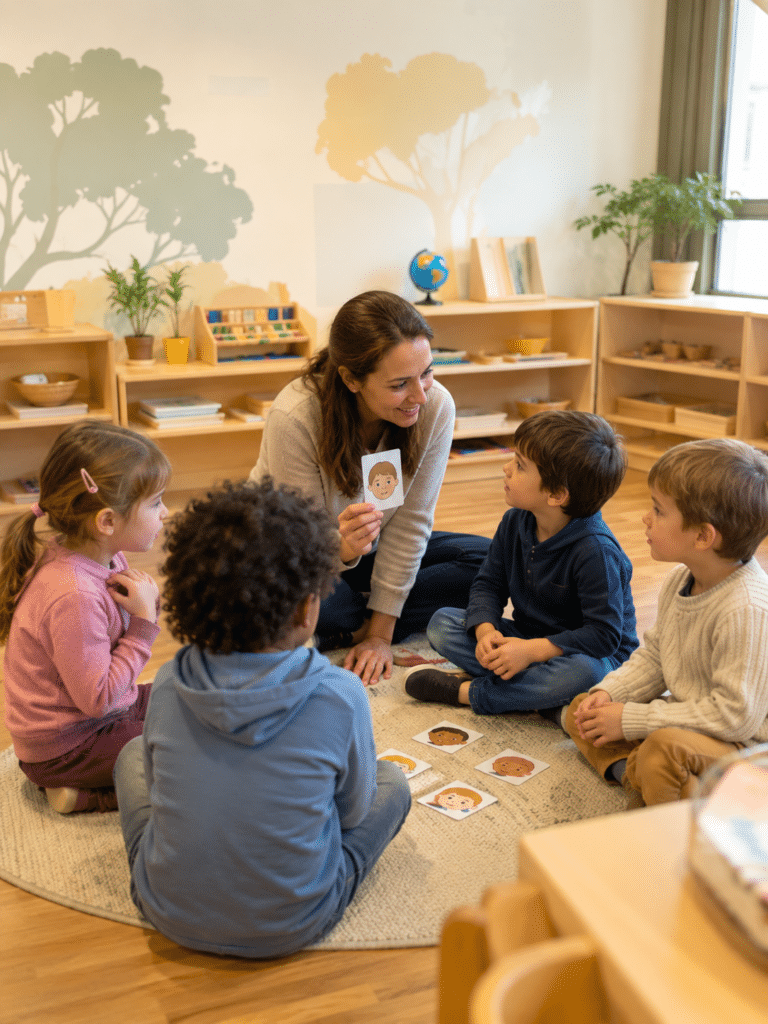
At the School of Optimism, our educational approach is not limited to transmitting knowledge. It also seeks to help children better understand themselves, gain confidence, find their place within the group, and grow into a more peaceful relationship with themselves and others.
The school combines a bilingual Montessori pedagogy with daily work on self-confidence, cooperation, and relationships with others, all within a structured, attentive, and profoundly human environment.
The goal is not only for the child to progress academically, but also to grow with greater autonomy, stability, and confidence.
An active, structured, and dynamic approach, in both French and English.
Daily focus on confidence, emotions, and relationships with others.
A framework that helps children participate, engage, and find their place.
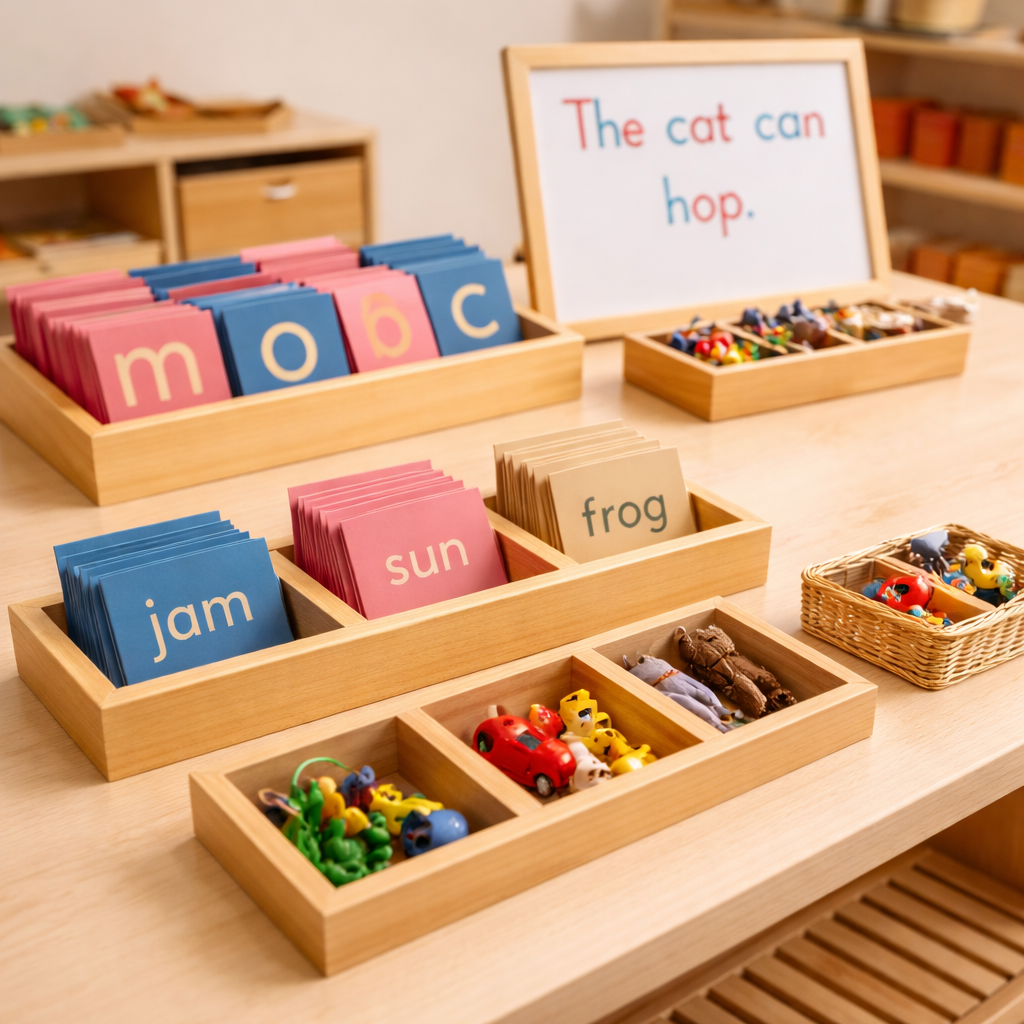
The school’s pedagogy is based on a Montessori approach that empowers children to take charge of their own learning.
It fosters autonomy, active engagement, hands-on learning, experimentation, and progress tailored to each child’s pace.
Bilingualism is also an integral part of the educational project. English is integrated into daily life from the early years and continues through elementary school in a vibrant, natural, and structured environment.
This dual promise—Montessori and bilingualism—forms the foundation of the pedagogical project.
Children learn to do things for themselves, to make choices, and to progress at their own pace.
Learning is achieved through experience, materials, and active engagement.
Bilingualism is experienced naturally within a vibrant and structured setting.
Feeling capable and recognized.
Learn to better understand what one feels.
Build more harmonious relationships.
Grow with greater balance.
One of the defining features of L’École de l’Optimisme is making emotional intelligence a core component of its educational project.
The school does not only support academic learning. It also places a real emphasis on self-confidence, understanding emotions, the quality of social bonds, and the child’s inner development.
This focus gives the pedagogy a unique character: more human, more mindful, and more holistic.
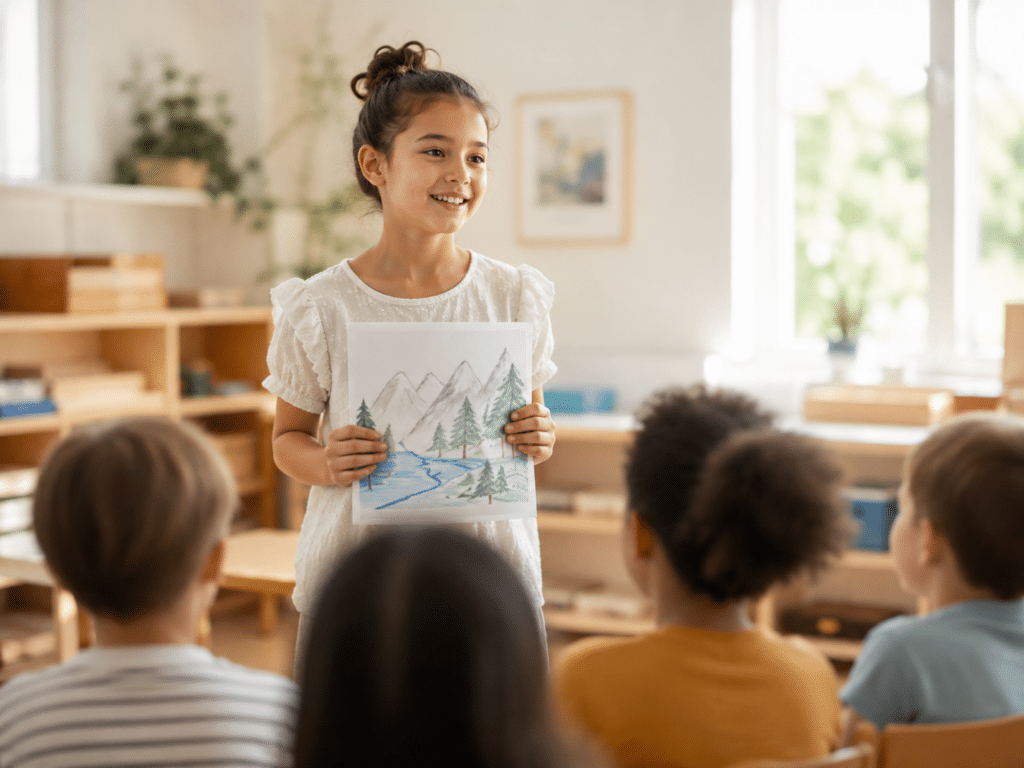
For older children, the school combines Montessori tools with a genuine pedagogy of cooperation.
The children’s council, mediation, show and tell, multi-age work, and participation in certain decisions give the child a real place in collective life.
The child gradually learns to speak up, to listen, to cooperate, to resolve certain tensions, and to better understand their responsibility within the group.
This relational and collective dimension is an integral part of the pedagogy.
A space to express oneself and participate in community life.
Learn to listen, communicate, and ease tensions.
Dare to present, share, and express oneself in front of others.
Cooperate and learn with children of different ages.

The school’s educational approach emphasizes making the child an active participant in their learning.
Children are encouraged to take on challenges, experiment, cooperate, participate, and engage more actively in their progress.
This approach helps children develop greater autonomy, responsibility, and confidence in their ability to learn.
It also creates a more positive relationship with learning, because the child doesn’t simply undergo school: they take part in it.
Trying, handling, and learning through action.
Taking part in classroom life and projects.
Developing confidence, autonomy, and responsibility.
The child learns to know themselves better, recognize their progress, and feel more capable.
They progress in their ability to do things independently, to choose, to organize themselves, and to take their place.
They discover how to live with others, listen, engage in dialogue, and build within the group.
Children engage more actively in what they learn and how they learn.
French and English accompany their journey in a coherent and vibrant environment.
Trust, structure, and the quality of human connection make learning more serene.